Share buybacks have long been a favorite tool for Indian companies to reward their shareholders. However, the tax landscape has shifted dramatically over the last two years. If you are an investor, understanding the timeline from October 2024 to April 2026 is the difference between a high tax bill and a smart exit strategy.
In this post, we break down why buybacks are becoming “attractive” again for retail investors starting April 1, 2026.
🕒 The Three Phases of Buyback Taxation
To understand where we are going, we must look at where we’ve been. The Indian government has essentially “reset” the clock on how buybacks are handled.
Phase 1: Before October 2024 (The “Company Pays” Era)
In the old days, the company paid a Buyback Distribution Tax (around 23.3%). For you, the investor, the money hitting your bank account was 100% tax-free. It was a “set it and forget it” win for retail investors.
Phase 2: Oct 2024 – March 2026 (The “Dividend” Era)
The Finance Act 2024 changed the game. Suddenly, buyback proceeds were treated as Dividend Income.
- The Problem: You are taxed at your income tax slab rate (up to 30%+).
- The Catch: You couldn’t deduct your purchase price from the income. Your purchase cost became a “Capital Loss” which you could only use to offset other gains. For many, this meant paying tax on the full amount received, not just the profit.
Phase 3: From April 1, 2026 (The “Capital Gains” Era)
In a major relief for retail investors, the government has moved back to a Capital Gains model. Buybacks will no longer be treated as dividends. Instead, you only pay tax on the actual profit (Buyback Price – Purchase Price).
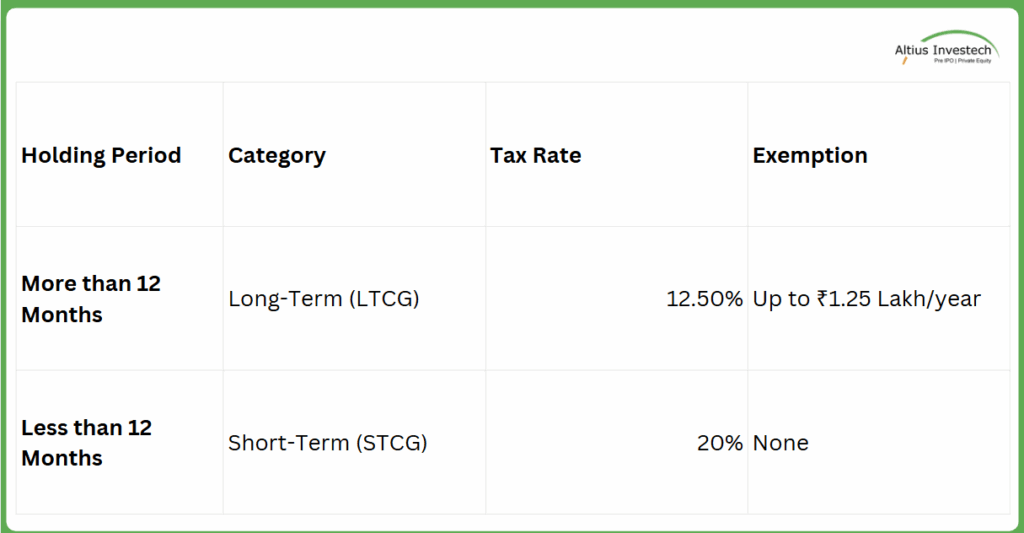
📊 New Tax Rates (Effective April 2026)
Under the new regime, buyback profits are categorized just like regular stock market gains:
💡 Why This is a Huge Win for Retail Investors
Let’s look at a simple example to see the difference in your pocket.
The Scenario: You bought 100 shares at ₹100 each. The company buys them back at ₹150.
- Under the Dividend Rule (2024-2026): You might pay 30% tax on the full ₹15,000. Tax = ₹4,500.
- Under the New Rule (Post-April 2026): You only pay tax on the ₹5,000 profit. If held for over a year, 12.5% Tax = ₹625.
That is a massive saving of nearly ₹3,800!
⚠️ The “Promoter” Twist
While retail investors are celebrating, the rules have tightened for Promoters. To prevent companies from using buybacks just to dodge taxes, promoters may face an additional surcharge (roughly 12%) on the company’s side of the transaction. This ensures that the “tax parity” between dividends and buybacks remains fair across the board.
🎯 Final Verdict: Should You Participate?
The 2026 rule change makes buybacks highly attractive again.
- Tax Planning: You only pay for the “Alpha” (the profit), not the principal.
- Parity: Buybacks are now taxed similarly to selling your shares on the open market, but often at a premium price.
- Efficiency: For those in the 30% tax bracket, the shift from “Slab Rate” to “12.5% LTCG” is a game-changer.
Are you holding shares for a potential buyback? Make sure to check your holding period to qualify for the lower 12.5% LTCG rate!